

One of the most frustrating things in disc golf is trying to find a replacement for a disc you loved, and finding out that it does not fly like you wanted it to. There are several reasons this may be the case. Some of them are definitively proven, and some are still up for debate.
Dome: The dome height of a disc is a contreversial topic for what affect it has and does not have on a flight of a disc. Some say flat discs are more Overstable, while others say domey discs are more stable. What is true however is that Domey discs have more glide, and flatter discs tend to glide less, and take more speed to fly how they are designed to. Flat discs also tend to hold the angle they are thrown at longer in their flight. A more domey disc may show a higher degree of turn, and a larger fade in it’s flight.
Bluntness: the dome of a disc, and the degree of bluntness of a disc seem to go hand in hand. A domier disc is going to be more rounded, and a flatter disc is going to be much more blunt nosed. The more blunt rimmed a disc is, the more Overstable it is going to be. This is especially true for mid range and putters. As Shown below, the stingray on the left is much flatter, and more blunt than the stingray on the right. Both discs are in star plastic, and should fly the same, but do not because of their wing profile.

Plastic Durability: The more durable, premium the plastic blend of a disc is, the more overstable it will fly. The opposite being true for less durable base plastics. This is not a bad thing, as a more understable disc may be desired. This can also allow for taking a overstable disc, and cycling it to fill multiple roles in your bag. Allowing the player to get confortable throwing one mold for more shots.
Plastic Stiffness: The more stiff a plastic blend is, the more Overstable it will fly. Gummier, more flexible plastics such as G-Star will not fly as stable as its stiffer plastic counterparts

Wing shape: The shape of the wing of a driver ( more noticable in higher speed drivers) can have a huge affect on its stability.

As you can see in the above picture. The rims of these two discs are noticably different. The Disc on the right has a more curved, concave curve in the rim, where as the red disc on the right is much straighter. The more concave this bend is, the more Overstable the flight is going to be. A straighter, to even convex curve in the rim will make a disc fly less stable than typical for that mold.
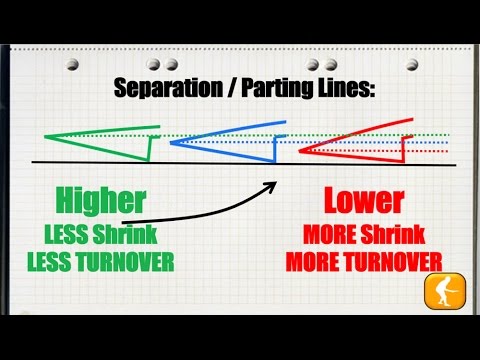
Parting Line Height: The parting line height of a disc is the visible line where the top and bottom molds of a disc meet. The higher the line, the more Overstable the disc will fly. Variation in this occures in the manufacturing, and cooling down of the plastic in production. Apperantly Temperature, air pressure, and humidity at the time of production all play a role in how a disc sets.





 bronsonsblog