What changes a discs flight

Featured

One of the most frustrating things in disc golf is trying to find a replacement for a disc you loved, and finding out that it does not fly like you wanted it to. There are several reasons this may be the case. Some of them are definitively proven, and some are still up for debate.

Dome: The dome height of a disc is a contreversial topic for what affect it has and does not have on a flight of a disc. Some say flat discs are more Overstable, while others say domey discs are more stable. What is true however is that Domey discs have more glide, and flatter discs tend to glide less, and take more speed to fly how they are designed to. Flat discs also tend to hold the angle they are thrown at longer in their flight. A more domey disc may show a higher degree of turn, and a larger fade in it’s flight.

Bluntness: the dome of a disc, and the degree of bluntness of a disc seem to go hand in hand. A domier disc is going to be more rounded, and a flatter disc is going to be much more blunt nosed. The more blunt rimmed a disc is, the more Overstable it is going to be. This is especially true for mid range and putters. As Shown below, the stingray on the left is much flatter, and more blunt than the stingray on the right. Both discs are in star plastic, and should fly the same, but do not because of their wing profile.


Plastic Durability: The more durable, premium the plastic blend of a disc is, the more overstable it will fly. The opposite being true for less durable base plastics. This is not a bad thing, as a more understable disc may be desired. This can also allow for taking a overstable disc, and cycling it to fill multiple roles in your bag. Allowing the player to get confortable throwing one mold for more shots.

Plastic Stiffness: The more stiff a plastic blend is, the more Overstable it will fly. Gummier, more flexible plastics such as G-Star will not fly as stable as its stiffer plastic counterparts

While both of these discs are Champion Firebirds, the pink one flies much more stable than the color glow counterpart. The Pink Firebird is much stiffer, and flat, while the color glow blue Firebird is made with a more gummy, flexible blend that has a larger dome.


Wing shape: The shape of the wing of a driver ( more noticable in higher speed drivers) can have a huge affect on its stability.

As you can see in the above picture. The rims of these two discs are noticably different. The Disc on the right has a more curved, concave curve in the rim, where as the red disc on the right is much straighter. The more concave this bend is, the more Overstable the flight is going to be. A straighter, to even convex curve in the rim will make a disc fly less stable than typical for that mold.

Parting Line Height: The parting line height of a disc is the visible line where the top and bottom molds of a disc meet. The higher the line, the more Overstable the disc will fly. Variation in this occures in the manufacturing, and cooling down of the plastic in production. Apperantly Temperature, air pressure, and humidity at the time of production all play a role in how a disc sets.
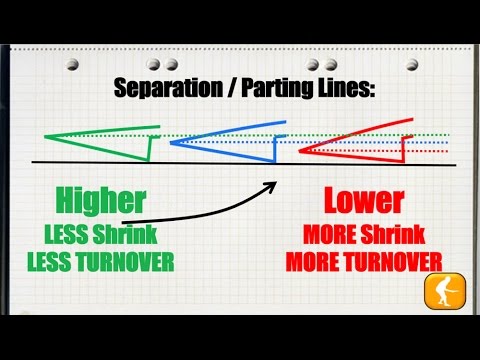
Image result for disc golf parting line height
This diagram shows how a disc’ parting line height may change in production, and what affect it may have on its flight.


Disc Wars: Distance driver edition

In 2007 Innova changed the sport by releasing the fastest flying disc at the time. The Destroyer was the first 12 speed disc disc golf, and players loved the controllable distance it gave to players who could throw up to the speed it was designed for.

Since 2007, every brand has released high speed, slightly overstable distance drivers in hopes of remaking the dependable far flight a destroyer could give, sometimes even making wider rim drivers that fly faster.

Today i will be comparing the iconic Star Destroyer to the newly released Discraft Kong. With Paul Mcbeth ( 4x world champion) leaving Innova, and moving to Discraft, he needed a Destroyer replacement for his 5+ destroyers he was used to bagging. The Kong is this replacement.

Flight: With Both the Destroyer and the Kong having the same exact flight numbers, you guess that the discs would fly similarly to each other, and you would be correct. A new Destroyer, and a new Kong ( when thrown up to speed about 400 ft of distance) will both have a relatively straight flight, ever so slightly turning, and having a dependable fade to finish off its flight. Destroyers are known for being very cycle-able, having different stages of wear to cover different stability levels. While i haven’t thrown a Kong long enough to show any noticeable change in flight with my Kong, every disc is subject to this so i imagine a Kong should be just as versatile.

Feel: Because different runs of different discs can feel very different to each other, I tried to best match a destroyer to the same specs as the Kong i was comparing to. Both discs have a healthy amount of dome to them, have around the same amount of stability, and are both relatively new as to not let aging plastic affect this comparison. The Kong in my opinion has a much sharper feeling edge on the rim. This is most likely due to the .1mm larger rim thickness. My hand seems to just be more comfortable trying to grip hard on the Destroyer versus the Kong. Based off feel of the disc, the Destroyer wins.

Plastic: Comparing both a Star Destroyer, and an ESP Kong, Both plastic blends should be fairly similar. They are both Innova’s, and Discraft’s premium, opaque plastic blend. I would say Innova’s Star plastic is a bit drippier. Both Star, and ESP are somewhat flexible, but not floppy, giving both discs a very nice grip to them, while not having too much flex to it. The Kong is currently available in a beautiful, swirly plastic that IMO looks better than a plain, simple colored disc. The Destroyer is available in a much larger amount of plastics than the Kong. The Kong only being available in ESP currently, the Destroyer is available in over 10 different plastic blends. This could be used to have multiple Destroyers have very different flight characteristics, and is currently not possible to do so with Discraft’s Kong. In my opinion, Innova also wins with offering better plastic than Discraft.

Availability: Both the Destroyer and Kong are widely available online for stock prices, and should be possible to find somewhat locally everywhere at this point. The Destroyer has the advantage that smaller retailers who may not sell as many discs most likely will still have destroyers in stock, as they have been on the market for over a decade, and are a popular option for a majority of players.

One thing should be said about Destroyers, and that is their collect ability. If a player gets attached to a particular run of Destroyers, it may cost them much more than a stock disc. Runs such as Avery Jenkins Signature Destroyers going for 40-100+, and Anthon Destroyers going for over 200 are a regular occurrence. Some other popular runs of Destroyers like Splatter Star Destroyers, or older Steve Brinster Destroyers going for 50 dollars regularly can take a toll on ones wallet.

Winner: I believe the Destroyer takes the cake in this debate. Destroyers are available in a wide variety of plastics, making them more tune-able to a players liking. Feel better in my hand, and are widely available, with a collectible market for them. Kongs are a great disc, but not my choice in this debate.