What changes a discs flight

Featured

One of the most frustrating things in disc golf is trying to find a replacement for a disc you loved, and finding out that it does not fly like you wanted it to. There are several reasons this may be the case. Some of them are definitively proven, and some are still up for debate.

Dome: The dome height of a disc is a contreversial topic for what affect it has and does not have on a flight of a disc. Some say flat discs are more Overstable, while others say domey discs are more stable. What is true however is that Domey discs have more glide, and flatter discs tend to glide less, and take more speed to fly how they are designed to. Flat discs also tend to hold the angle they are thrown at longer in their flight. A more domey disc may show a higher degree of turn, and a larger fade in it’s flight.

Bluntness: the dome of a disc, and the degree of bluntness of a disc seem to go hand in hand. A domier disc is going to be more rounded, and a flatter disc is going to be much more blunt nosed. The more blunt rimmed a disc is, the more Overstable it is going to be. This is especially true for mid range and putters. As Shown below, the stingray on the left is much flatter, and more blunt than the stingray on the right. Both discs are in star plastic, and should fly the same, but do not because of their wing profile.


Plastic Durability: The more durable, premium the plastic blend of a disc is, the more overstable it will fly. The opposite being true for less durable base plastics. This is not a bad thing, as a more understable disc may be desired. This can also allow for taking a overstable disc, and cycling it to fill multiple roles in your bag. Allowing the player to get confortable throwing one mold for more shots.

Plastic Stiffness: The more stiff a plastic blend is, the more Overstable it will fly. Gummier, more flexible plastics such as G-Star will not fly as stable as its stiffer plastic counterparts

While both of these discs are Champion Firebirds, the pink one flies much more stable than the color glow counterpart. The Pink Firebird is much stiffer, and flat, while the color glow blue Firebird is made with a more gummy, flexible blend that has a larger dome.


Wing shape: The shape of the wing of a driver ( more noticable in higher speed drivers) can have a huge affect on its stability.

As you can see in the above picture. The rims of these two discs are noticably different. The Disc on the right has a more curved, concave curve in the rim, where as the red disc on the right is much straighter. The more concave this bend is, the more Overstable the flight is going to be. A straighter, to even convex curve in the rim will make a disc fly less stable than typical for that mold.

Parting Line Height: The parting line height of a disc is the visible line where the top and bottom molds of a disc meet. The higher the line, the more Overstable the disc will fly. Variation in this occures in the manufacturing, and cooling down of the plastic in production. Apperantly Temperature, air pressure, and humidity at the time of production all play a role in how a disc sets.
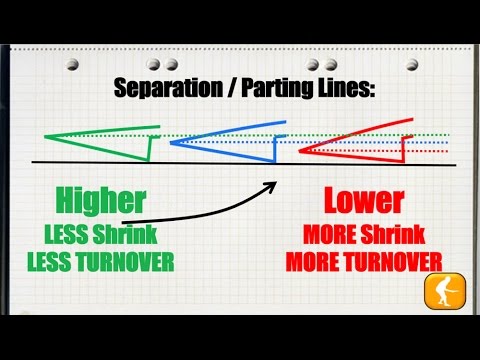
Image result for disc golf parting line height
This diagram shows how a disc’ parting line height may change in production, and what affect it may have on its flight.


Disc Wars: Clash of the Putters

Putters are arguably the most important discs in any disc golfers bag. Not only are they there to make putts, but putters can come in handy for a variety of other shots as well. Picking the right putter is different for everybody

Image result for classic aviar

The Aviar has been one of the most popular discs since its first release in 1984. Nearly every company has a disc made to be similar to the Aviar. I used to putt with the aviar, and have now switched to a similar disc, the Discmania P2.

The P2 is discmania’s most popular putter, being so popular that even some Innova sponsored players use the P2 for their putter. Discmania discs are produced by Innova, making it possible for high level pros to use discs from the other company of their sponsorship, but i believe this to not be in effect for new sponsors as both Discmania and Innova are trying to go away from this.

Both the Aviar and the P2 are beadless, stable ( but not overstable) putters with the flight numbers 2,3,0,1, with very similar profiles. While these discs are very similar in flight, feel,etc. there are some slight differences that convinced me to make the change.

Feel: When comparing an Aviar to a P2, you will notice the P2 feels noticably deeper, and bulkier in your hand. I have larger hands, and like the bigger feel of the P2. Others hate this, and typically use a more shallow putter. Some people might like the feel of the P2 for putting, but for any full throw, approach shot, etc. P2’s can be a bit too deep for some to get a clean release.

In this picture, the p2 is the top most disc, and an Aviar on the bottom. As you can see, the P2 is much bulkier than the Aviar. Aviar’s bevel on their rim feels a bit sharper,and less rounded than the P2.

Flight: When it comes to actual throws with these putters, i believe the differences in flight really shine. I started throwing p2’s because i wanted to start throwing more putter shots. Both discs are very throwable off the tee, but extra bulkieness, and bluntness of the P2 makes it a bit more over stable. This, along with varying premium plastics such as C-line, and basic d- line plastic, and varying the beat up’ness of the disc can give you a spectrum of flights off of the same mold. The aviar is not as stable in full flight speed, making it a bit less versatile. This could of course be covered with the releases of the more over stable Aviar3, and the Aviarx3.

Availability: As Innova is the manufacturer of both the Aviar, and the P2, Plastic blends are similar across the board. The availability of whatever plastic you may be looking for may be more limited with Discmania however. Discmania has Innova produce their discs through contract work. Innova is obviously going to prioritize their own production before discmania’s. This will mean that most likely, on average, a P2 in the same plastic will cost slightly more than an Aviar.

Verdict: I chose the P2 as my primary putter. This is because i like the feel of it better than an Aviar. The larger, taller rim of it fits me better, and i think everyone should base their putter choice off what they like most, and not what someone else tells them. The P2 makes a great throwing putter, making it versatile in a ton of shots, even in windy conditions where putters typically do not do well.

Disc Wars: Distance driver edition

In 2007 Innova changed the sport by releasing the fastest flying disc at the time. The Destroyer was the first 12 speed disc disc golf, and players loved the controllable distance it gave to players who could throw up to the speed it was designed for.

Since 2007, every brand has released high speed, slightly overstable distance drivers in hopes of remaking the dependable far flight a destroyer could give, sometimes even making wider rim drivers that fly faster.

Today i will be comparing the iconic Star Destroyer to the newly released Discraft Kong. With Paul Mcbeth ( 4x world champion) leaving Innova, and moving to Discraft, he needed a Destroyer replacement for his 5+ destroyers he was used to bagging. The Kong is this replacement.

Flight: With Both the Destroyer and the Kong having the same exact flight numbers, you guess that the discs would fly similarly to each other, and you would be correct. A new Destroyer, and a new Kong ( when thrown up to speed about 400 ft of distance) will both have a relatively straight flight, ever so slightly turning, and having a dependable fade to finish off its flight. Destroyers are known for being very cycle-able, having different stages of wear to cover different stability levels. While i haven’t thrown a Kong long enough to show any noticeable change in flight with my Kong, every disc is subject to this so i imagine a Kong should be just as versatile.

Feel: Because different runs of different discs can feel very different to each other, I tried to best match a destroyer to the same specs as the Kong i was comparing to. Both discs have a healthy amount of dome to them, have around the same amount of stability, and are both relatively new as to not let aging plastic affect this comparison. The Kong in my opinion has a much sharper feeling edge on the rim. This is most likely due to the .1mm larger rim thickness. My hand seems to just be more comfortable trying to grip hard on the Destroyer versus the Kong. Based off feel of the disc, the Destroyer wins.

Plastic: Comparing both a Star Destroyer, and an ESP Kong, Both plastic blends should be fairly similar. They are both Innova’s, and Discraft’s premium, opaque plastic blend. I would say Innova’s Star plastic is a bit drippier. Both Star, and ESP are somewhat flexible, but not floppy, giving both discs a very nice grip to them, while not having too much flex to it. The Kong is currently available in a beautiful, swirly plastic that IMO looks better than a plain, simple colored disc. The Destroyer is available in a much larger amount of plastics than the Kong. The Kong only being available in ESP currently, the Destroyer is available in over 10 different plastic blends. This could be used to have multiple Destroyers have very different flight characteristics, and is currently not possible to do so with Discraft’s Kong. In my opinion, Innova also wins with offering better plastic than Discraft.

Availability: Both the Destroyer and Kong are widely available online for stock prices, and should be possible to find somewhat locally everywhere at this point. The Destroyer has the advantage that smaller retailers who may not sell as many discs most likely will still have destroyers in stock, as they have been on the market for over a decade, and are a popular option for a majority of players.

One thing should be said about Destroyers, and that is their collect ability. If a player gets attached to a particular run of Destroyers, it may cost them much more than a stock disc. Runs such as Avery Jenkins Signature Destroyers going for 40-100+, and Anthon Destroyers going for over 200 are a regular occurrence. Some other popular runs of Destroyers like Splatter Star Destroyers, or older Steve Brinster Destroyers going for 50 dollars regularly can take a toll on ones wallet.

Winner: I believe the Destroyer takes the cake in this debate. Destroyers are available in a wide variety of plastics, making them more tune-able to a players liking. Feel better in my hand, and are widely available, with a collectible market for them. Kongs are a great disc, but not my choice in this debate.

Disc Wars: Signature Disc editon

In the ever competitive battle between Innova, and Discmania, lies two similar tour series discs, made to support popular sponsored players of their corresponding company.

Discs: The Sexton Firebird, made for Innova’s sponsored player Nate Sexton, is a VERY popular tour series disc released each year since 2015. Made in a colored, glow plastic, this run of firebirds is a bit more domey, and less stable than the average firebird.

While a firebird is usually a utility, very overstable fairway driver, the Sexton Firebird is considered a much more thrower friendly, straighter, but still dependable fairway driver.

Next is the Lizotte FD3. Made for former world record distance thrower Simon Lizotte and his touring finances, the Lizotte FD3 fills a much similar overstable, but not too overstable fairway role in ones bag. Every run of the Lizotte FD3 has been in a star plastic, unlike Sexton’s color glow, champion plastic.

Flight: With both the firebird and the FD3 having the same flight numbers of 9,3,0,4, both discs should fly very similarly. This is the case in testing that i have observed. Both discs were very dependable, but throwable enough to not just find their way to the ground immediately after leaving my hhands. In my experience, the FD3 flew a tiny bit further consistently. This might be because the Lizotte FD3 feels faster, so i simply put more power on it.

Feel: The feel of a disc can be one of the biggest factor in why someone will choose to bag one disc over another, and this can very easily be the case for the battle between these two discs.

The Sexton Firebird is a much domier disc than the FD3. Dont let this turn you away, as the dome is still moderate. Sexton firebird’s plastic blend is very gummy, flexible, and gives great grip. This allows the thrower to confidently feel the disc, and trust that it is not gonna slip out of their hand on accident.

The Lizotte FD3 is a much flatter, sharper, faster profile than the Firebird. This allows for a much stronger grip around the rim. The Swirly star plastic the FD3 is made from is pretty grippy, but not as gummy as a Sexton Firebird. Fans of sleek, fast, meaty discs will like the Lizotte FD3’s. Overall I prefer the sleek, faster feel of the FD3 for this role.

Price: Both the Sexton Firebird, and the Lizotte Fd3 are tour series discs, meaning that a significant portion of the price of every disc goes to said athlete. This raises the price of the disc compared to their stock counterparts. a new 2018 Sexton Firebird was sold from Innova for the price of $19.99, and the Lizotte Fd3 goes for $22.99. This is likely because Discmania has their discs produced by Innova, so Innova takes their cut of the price.

Verdict: In the battle between the Sexton Firebird, and the Lizotte FD3, my preference goes to the Lizotte Fd3. With star plastic being my overall favorite for drivers, sleeker, flatter profile being my preferene, and being just as dependable while going a bit further; the FD3 wins.

Disc Wars: Thunderbird vs. PD

Featured

The Discmania Power Driver, or the PD, is a wildly popular control driver released by Discmania in 2008. With a moderately fast speed (10) and a controlably over stable flight path, this disc quickly became a fan favorite.

Image result for discmania PD


In 2014, Innova, the company that produces discs for Discmania BTW, released the Thunderbird. Advertised as a faster version of their famous teebird,the Thunderbird has very similar flight characteristics to the Discmania brother the PD.

Feel: With the PD having a slightly faster rim, a 10 speed versus the Thunderbird’s 9 speed, the rim feels beefier in the hand. While this is a personal preference, i like the feel of the faster rim of the PD. The Thunderbird’s wing feels a bit taller, and not as comfy to grip tightly. Plastic wise, the PD and the Thunderbird should be identical, as Innova and Discmania share their plastic.

Flight: The Thunderbird aims at being a faster version of the popular Teebird. This meaning a fairly straight flight out of the disc, with a slight, but dependable fade to finish off the flight. This is done well by the Thunderbird, giving the disc a trusty, dependable, controllable flight. The PD is very similar in this flight, but does so with a bit less glide, and a tiny bit more over stable flight. This does mean the PD is more dependable in high wind conditions.

Image result for innova thunderbird

Final Verdict: While both the Power Driver, and the Thunderbird share the same role as a over Stable Control Driver, The PD is the better disc in my opinion. The PD has a sleeker feel in my hand, and is more trustworthy when i need it. While the PD is more over stable and may not be ideal when distance is needed, a beat up PD could solver this problem. PD’s are not made as often as the Thunderbird, and being so, more information is known about each different run of the PD. This makes it possible to fine tune what you like and do not like about the PD, to get the perfect disc for this slot in my bag.

Disc Wars: Innova Caiman vs Hyzerbomb Mortar

Featured

Another week, another Disc Wars Blog Post. This week’s topic of DISCussion is the better beadless overstable Mid Range. Both these discs are said to be a Innova Gator without the bead. Both produced by Innova, and are made of a similar plastic blend, so comparisons should be fair and even.

Beadless Gators are a rare run of Pre Flight Numbered star gators. These gators however are different than every gator produced. This rare batch of gators are missing the large bead that the gator is traditionally known for. A bead on a disc usually increases drag on the disc, making it glide less, act more stable, and slow down the effects of wear.

Beadless gators are sought after, largely because the lack of a bead gives the disc a bit more glide, and comes out easier on the release. Beadless Gators are loved by sidearm throwers.

Hyzerbomb, who contracts innova to produce their molds, noticed the need for a replacement for this out of production disc, and developed the Mortar. This flat topped, beadless, blunt midrange is well thought to be the official replacement for the rare Beadless Gator. With the same height, similar profile, and width, these discs are very similar.

In 2018, Innova saw the demand for a beadless gator replacement of their own, with the success of the Mortar, Innova released their own version of the sought after disc. The Caiman, named after the species that is part of the same family as aligators, is this disc. While it is not exactly the same mold as the beadless gator, Innova definitely used the mold to model the Caiman’s mold. Now lets get to comparing the two discs.

Shape:  While both discs seem to be based off the well liked Beadless Gator mold, they are slightly different. The Mortar has a much more flat top, blunter rim, and is slightly taller ( 2mm) The Caiman seems to be aiming for a lower profile feel. With less blunt of a profile, being 2 mm shorter, it feels that way. The Caiman also sports a bit of a dome. While my PFN Beadless Gator also has a slight dome, it is much less noticeable, and likely only exists because it has seen its fair share of collisions.

In my opinion, the Mortar feels better in my hand. The slight bulkiness fits my large hands better, the flat top leads to more consistent releases, especially with sidearm throws.

plastic: While this is purely preference, The Mortar comes in better plastic. Old PFN star plastic is known for being a bit gummy, and amazingly durable. Not taking nicks, and slowly wearing in. Newer star plastic tends to take nicks much easier. While the discs i am comparing are both pretty new, the Mortar’s plastic feels better, and has shown fewer signs of wear. I think this is due to the fact that Hyzerbomb is a smaller company, with less sales. This leads to a smaller run, with more quality control. Mass produced Caimans feel like they were made quicker, and with less attention given to them.

flight: Comparing the Mortar to the Caiman, the Mortar came on top in terms of filling the slot a beadless gator would in my bag. It is more overstable, but still shows hints of glide. The overstable characteristics of its flight allows the thrower to have confidence in the disc that it will do what is expected, even in high wind situations. I did not see as much of this in the Caiman. The less blunt profile, and the larger dome may have lead to this. Both discs were in the discs approved max 175 g weight.

price: Innova beats Hyzerbomb on this one, at least in stock runs. This is basic supply and demand. Innova has the capabilities of mass producing the Caiman, lowering the price. They also produce their own discs, while Hyzerbomb contracts out to innova for their molding. This also allows lower prices. The caiman is also available as factory x-outs for an even cheaper price point.

review:  The Hyzerbomb Mortar comes out on top in this one. With an overstable midrange disc being important to my bag, i am willing to spend a bit on it. Price is not a factor for me in this variable. I much prefer the plastic blend in the Mortar, as it feels a bit more like old, sought after PFN star plastic. The feel of the disc is also more ideal for me. The bulkier, flat profile of the Mortar just feels better in my hands than the Caiman. Maby the Caiman would feel better if it was flatter. Flight wise the Mortar also comes in on top. The more overstable flight of the Mortar is exactly what i want in this disc. It is not overly, overstable to the point where it is lacking glide, while still being very overstable in all conditions. Over all, I believe the Mortar is the king in the Beadless, Overstable mid range disc.

Disc Wars: 2nd run Fd vs Luster Leopard3

Featured

Disc golf can be a weird sport. Certain runs of specific discs can be highly sought after. One of these rare discs is Discmania’s 2nd run FD. Normally an FD ( short for fairway driver) is a very neutral seven speed driver, slightly understable, and comparable to the beginner friendly Innova Leopard.

A 2nd run Fd however fills a totally different role in ones bag. 2nd run FD’s are known as the most overstable, beefy FD out there. Out of the box you can put full power on them, traveling very straight but not getting any turn, and a dependable fade at the end of its flight. Much the opposite of a stock run FD. The plastic on a 2nd run is very stiff, and board flat, as oppose to the normally domey stock runs. These attributes make 2nd run FD’s a workhorse fairway driver for those who are willing to pay the big bucks for one, and expect to pay $50 + for one, close to 100 brand new.

In 2018, Innova released a run of Leopard3’s as a tour series disc for Drew Gibson. This run was released in their pearly, luster champion plastic. While a stock run Leopard3 would just be a flat top leopard, a well known, beginner friendly understable fairway driver, this run was not. Just like the 2nd run FD, this run of Luster Leo3’s had a much more overstable flight to it. Usually overstable discs like this do not have a ton of glide, but because both the Leopard3, and the FD are molds that are understable, they maintain a high amount of glide while still having an overstable flight path.

Comparing the two discs, they both could be used to fill this specific hole in ones bag. There are differences between them though.

Shape:  2nd run Fd’s are noticably flatter than the luster Leopard3. This makes the fd more sought after for forehand throwers.

Plastic: The Fd has an older, stiff, tacky feel to its champion plastic. Contrary to the Fd, the Leo3 is made with a gummier, grippier, more vibrant plastic. While both feel great, and are plenty durable, this is much an opinion based variable

Flight: Both the FD and the Leo3 have similar slightly overstable flights, the FD maintains its glide of it’s flippy counterpart. Not that the Leopard3 does not have a high amount of glide, but the FD fits this characteristic better.

Price:  Fans of the 2nd run FD will pay an arm and a leg for one. Often coming close to $100 each for a brand new one. While this is seen to be worth it by its dedicated fans of discmania ( discmaniacs), the Drew Gibson Luster Leopard3 can be bought easily through the Innova Pro Shop for $16.99. Keep this in mind not only for buying your first one, but replacements and backups, as once you start throwing these, you wont want to stop.

Review: Both the 2nd run Fd and the Luster Leopard3 can fill similar slots in ones bag. I believe they both have their pros and cons, and the thrower should put these variables into consideration when thinking of picking either one of these up.